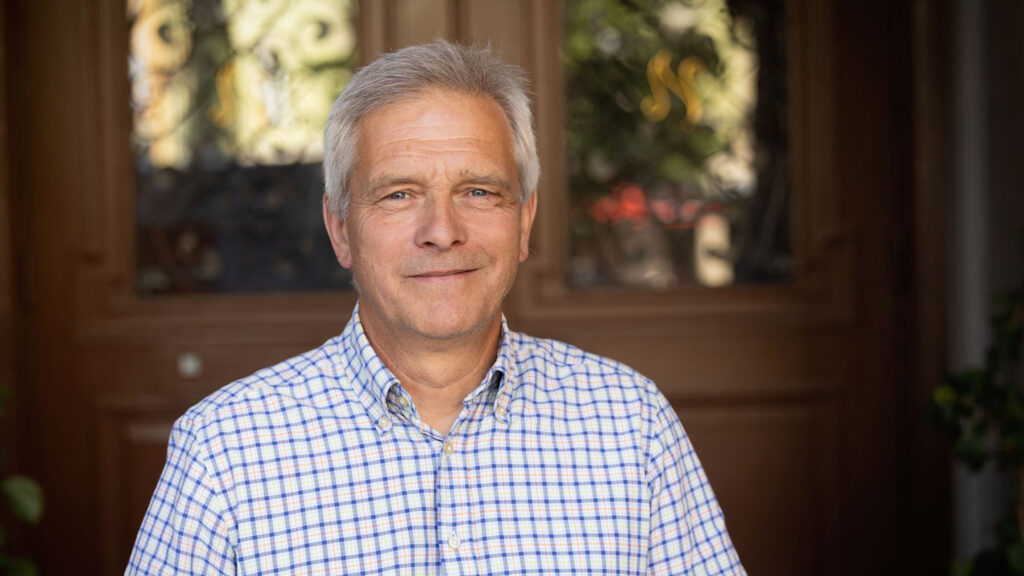
Few people have followed the development of vehicle electrification as closely as Robert Eriksson. Having worked on Volvo’s early plug-in hybrid prototypes in the 1990s and later witnessed the industry’s shift to large-scale electric vehicle production, he brings a unique long-term perspective on how far the technology has come. As he now retires after many years as Volvo Cars’ representative in the Swedish Electromobility Centre, we asked him to reflect on the electrification journey and what lies ahead.
“I started at Volvo Cars in 1988, so it has been 38 years. I celebrated that anniversary this March. I’m an electrical engineer from Chalmers. Before completing my master’s degree, I worked at Chalmers for a few years and got to know several PhD students and researchers who later joined Volvo Cars.
I found the field exciting, and eventually I received an offer to join Volvo Cars. At that time, the focus was on vehicle power supply systems. We could already see a growing need for electrical energy in vehicles. Looking back, that demand has only increased, and with electrification it has really exploded.”
So you were involved from the beginning of the electrification journey?
“Not directly with vehicle electrification, but during my time at Chalmers I worked with power engineering related technologies and learned a great deal from the PhD students and researchers there.
When I joined Volvo Cars, I had the opportunity to work very practically with electronics, power electronics and electrical machines. It was a small-scale, prototype-oriented environment. We built things to learn and understand how the technology worked.”
When did battery-powered vehicles begin to enter the picture?
“At Volvo Cars, electrification has happened in several waves. There was already interest during the energy crisis in the 1970s, when small electric vehicle prototypes were developed as alternatives to petroleum-based transportation.
The modern electrification effort that I was involved in started in the early 1990s. At that time, emissions legislation in the United States, particularly California, was a major driver. They introduced the ZEV-mandate stating that 10 percent of vehicles sold by major manufacturers should be electric 2003. The goal was to reduce emissions and accelerate technology development.
Volvo Cars was not required to build electric vehicles for California, but we found the area interesting and started an early project looking at plug-in hybrids with an electric range of around 100 kilometres.
The project was eventually cancelled because the technology was not mature enough, but it started a valuable learning journey for us.
We learned what is required to integrate an electric drivetrain into a vehicle, how different electrical systems affect performance, what battery systems look like, and what characteristics are important. Much of the work was theoretical, but it gave us concepts and knowledge that we later built upon.”
Everyone has to start somewhere.
“Exactly. Initially there were only around twenty people working on these topics. The work was eventually paused, but some years later electrification returned with another focus: reducing CO2 emissions and fuel consumption. The original emissions-driven projects had already shown us that electrification could significantly reduce fuel consumption. Those insights became the foundation for later hybrid and battery-electric vehicle development.”
When did you feel that things really started to take off?
“The turning point was when the first production version of the Volvo V60 Plug-in Hybrid entered production in 2012. That was when it became serious. Suddenly, many more people were involved, and the focus shifted to quality, reliability and customer needs. These vehicles had to work for many years in real customer use.
One challenge at that time was understanding the business case. The technology was expensive, and there was uncertainty about whether customers would adopt it. However, we managed to move forward, partly thanks to various partnerships and joint initiatives.
Over time we continued progressing, and around 2017 Volvo Cars made the strategic decision to focus much more heavily on electrification. I remember the meetings where those decisions were made. They were very exciting. It was another major step forward. Since then, we’ve developed both hybrids and fully electric vehicles, and electrification has become a core part of the company’s future.”
What was the first thing you focused on when designing electric vehicles?
“The first step was understanding what needed to change. Cars had followed the same basic architecture for more than a century. We needed to understand which components should be replaced, how they should be dimensioned, and what performance characteristics customers would expect.
We conducted many studies and simulations to understand vehicle behaviour, battery systems, power electronics and electric propulsion systems. One example is steering systems. In a conventional car, many supporting systems rely on an engine that is always running. In an electric vehicle, that is no longer the case, so new solutions are required. The same applies to climate systems and many other vehicle functions.”
What would you say is the biggest difference between the first electric vehicles and those delivered today?
The technology has matured enormously. Performance is one example. Today, even relatively small electric vehicles can outperform many traditional performance cars. Another major improvement is charging. Fast-charging capability has developed much more quickly than we anticipated in the early days.
Back then, we could see that electric vehicles would work if battery technology improved sufficiently. We understood the basic principles and knew it was technically feasible. What we didn’t know was whether the economics would work.”
So you never doubted the technology?
“No, not really. The uncertainty was more about timing and which breakthroughs would happen first. We knew the pieces fit together and that this development would eventually happen.
The biggest enabler has been battery technology. Batteries have improved enormously, driven not only by the automotive industry but in the beginning also by demand from mobile phones, laptops and consumer electronics.
That development has given us vehicles with sufficient range, practical charging times and a user experience that customers can accept. Also, the mobile connectivity between cars and various cloud functions has made the vehicles really smart with information always at hand.”
What are the next areas of development?
“There is still room for improvement in today’s batteries, and new battery technologies may create more opportunities in the future. That said, electrification has already happened. Now it’s largely about making the technology even better. Many components, such as electric motors and power electronics, already operate at very high efficiency levels. They’ll continue to improve, but eventually other aspects such as cost, manufacturing, thermal management and system integration will become more important.”
What about intelligent systems and routing?
“That’s an important area. Electrification is not only about technology. It’s also about bringing customers along in the transition. The experience must feel natural and convenient. Intelligent systems can help customers with route planning, charging and energy management.
We also need charging infrastructure, grid capacity and reasonable costs. All of these pieces have to work together. One area we have studied extensively is how vehicles can interact with the energy system. An electric vehicle can be more than transportation. It can also provide energy services and create additional value for society.”
Is that something customers will eventually buy as part of the vehicle?
“Potentially, yes. The challenge is making these services easy to understand and use. There are still questions around customer experience, economic incentives and business models, but these are exactly the types of challenges that require collaboration and discussion between industry, researchers and policymakers.”
How do you view Swedish Electromobility Centres’s role in the development of e-mobility?
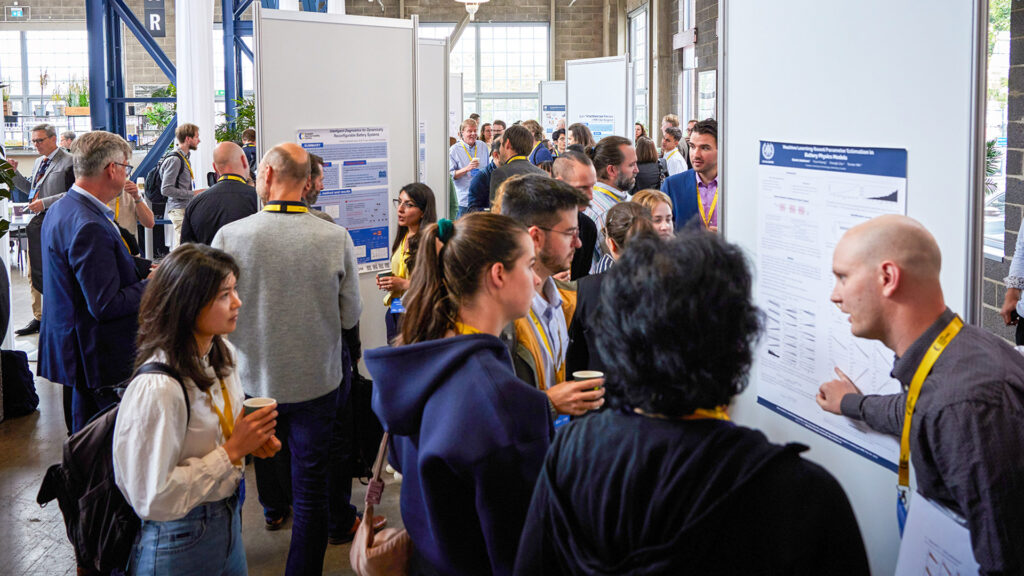
“One of the most important aspects is competence development. The researchers involved in SEC represent expertise that industry will need in the future. Within the centre we can collectively identify important research areas and support work that helps address future challenges.
The collaboration between industry, academia and the Swedish Energy Agency creates a very valuable platform. Innovation is important as well, and some projects generate results that can be used relatively quickly. But not every research project becomes a product.
Often the result is new knowledge, methods or models. Universities use that knowledge in education, and those students later become the engineers we hire. In that sense, education is one of the most important outcomes, and it requires a long-term perspective.”
Looking back at SEC’s projects over the years, is there anything that stands out?
“There are certainly specific examples, although I can’t list them all off the top of my head. What stands out most to me is the people. We have hired several individuals who came from these research environments and now hold specialist positions within the company. In that sense, the competence generated through the centre is perhaps its most visible impact.”
Finally, what are your plans after retirement?
“My plans are still quite open. My main focus is to have more flexibility and spend my time differently. But I remain curious about the technology and developments in electrification. I don’t rule out future involvement in some form. I’m open to opportunities that may arise, and we’ll see what happens.”